
Updated November 6, 2026
How to Choose the Right Tutor for VCE Maths: A Parent’s Checklist
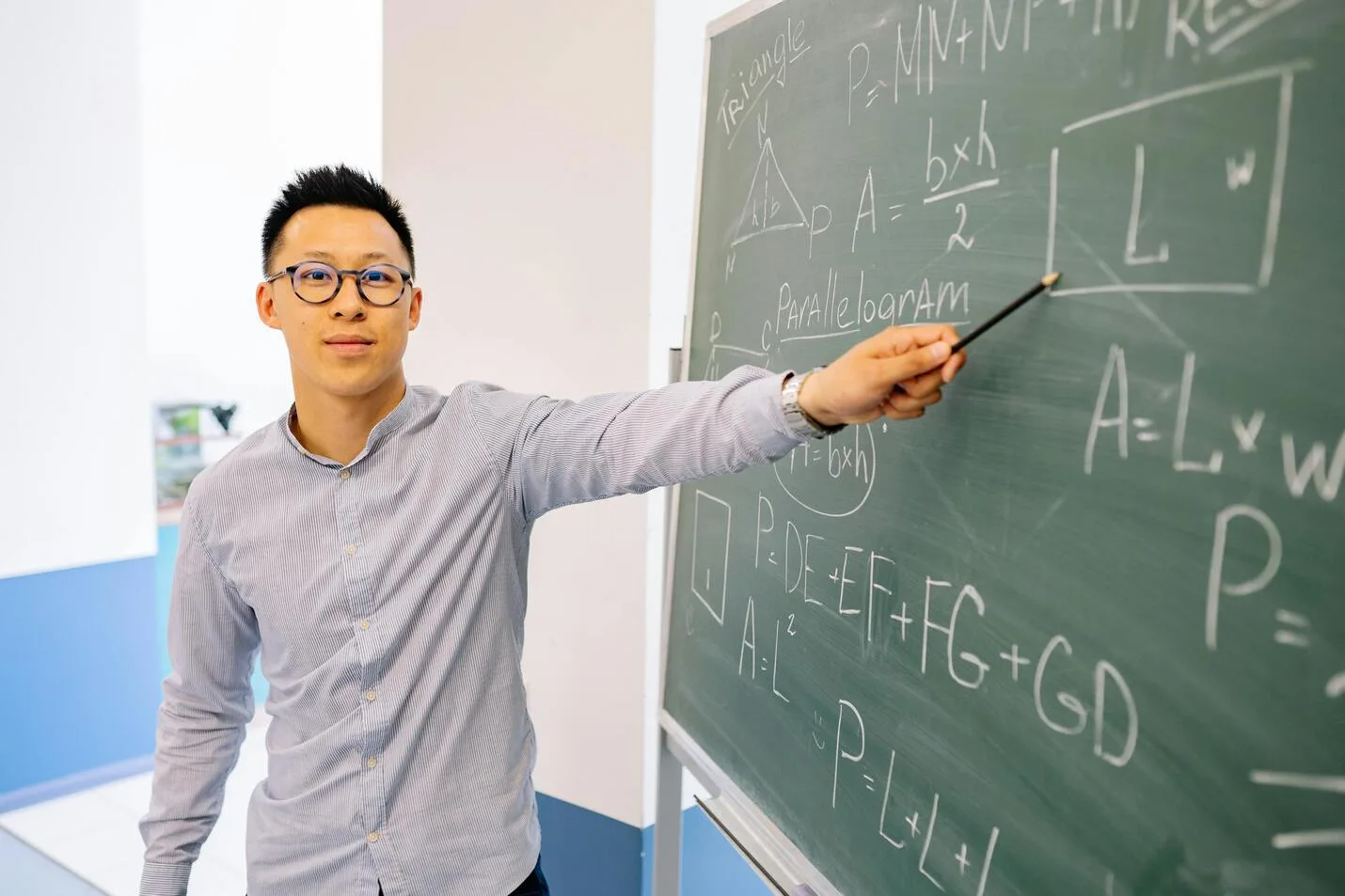
So, you’ve decided your child needs help with VCE Maths. That’s the easy part. The hard part is knowing what to look for.
With so many options, it’s easy to focus only on hourly rates or convenient locations. But the right support for VCE is about much more than someone who can help with homework. Many families see tutoring as a way to patch up leaks: to fix a bad grade or cram for an upcoming test.
The purpose of great tutoring is far bigger. The move into VCE is a big academic leap, often described by students as a “rude awakening”, and it is one of the hardest transitions in high school. It demands strategy, resilience and expert guidance, not just hard work.
This guide gives you a practical way to choose: start with the right subject, compare tutoring formats and costs, then use our checklist and questions to assess any tutor or program.
For personalised advice, contact the team at Premier Education today.
Start With the Subject: General, Methods or Specialist Maths
VCE offers three main maths subjects, and each one needs a slightly different kind of support. Before you compare tutors, make sure you know which subject (or combination) your child is taking, and what success looks like in it. The official VCAA study designs set out the content for each.
- General Mathematics: Focuses on data analysis, recursion and financial modelling, matrices and networks. Look for a tutor who drills exam-style application questions and builds strong technology (CAS) habits, as marks are often lost on interpretation and wording rather than difficult algebra.
- Mathematical Methods: Covers functions, calculus and probability, with one exam where no technology is allowed. Look for a tutor who builds algebra fluency without a calculator, teaches efficient CAS use for the second exam, and helps students prepare a useful bound reference.
- Specialist Mathematics: Usually taken alongside Methods, and the most demanding of the three. Look for a tutor with a strong record in Specialist themselves, who can stretch students with harder problems and proof-style reasoning.
If your child is still choosing between subjects, our guide on Specialist vs Methods support may help.
Compare Tutoring Formats and Costs
Tutoring comes in several formats, and the right one depends on your child and your budget.
- Private 1:1 tutoring: Fully personalised, but usually the most expensive option per hour, and the quality of resources depends on the individual tutor.
- Small group classes: A tutor works with a small group, so students get personal feedback plus the benefit of peer discussion, at a lower cost per student. We compare these models in detail in our guide to the benefits of small group tutoring.
- Large group classes: Often the cheapest per student, with good notes, but limited individual attention.
- Online tutoring: Can work just as well as in person if the class is interactive and lessons are recorded for revision.
How to compare prices fairly
Hourly rates for VCE maths tutoring vary widely, so avoid comparing on price per hour alone. Instead, work out what you get for the weekly cost:
- How long is each lesson, and how much of it is focused on your child?
- Are notes, question booklets and practice exams included?
- Are lessons recorded?
- Is help available between lessons, and is it included in the fee?
- Are there lock-in contracts or upfront term fees?
For reference, Premier Education’s VCE maths classes are $80 per week for a 2-hour small group lesson of up to 12 students, with resources, recorded lessons and out-of-hours support included and no lock-in contract.
What to Look For in a VCE Maths Tutor
Once you know the subject and format, these are the qualities that separate a great tutor from an average one.
1. A Proven System, Not Just Homework Help
The single biggest mistake is choosing a tutor who only reacts to weekly homework problems. A great tutor works proactively, with a clear plan to put students ahead.
The central role of practice exams
VCE Maths success isn’t just about understanding the content; it’s about applying it under pressure. That means completing practice exams, and lots of them. A good tutor builds this into the program, helping students improve their timing, accuracy and resilience on exam day.
Finishing the curriculum early
Many schools finish teaching the Units 3 and 4 content only a few weeks before the final exams. That leaves little time for consolidated revision. A strong tutoring program runs ahead of school, so there is a buffer for exam practice.
What a proven system looks like
- A structured curriculum aligned with the VCAA study design.
- Deliberate practice that targets specific weaknesses.
- Explicit teaching of exam technique and time management.

2. A Role Model Who Inspires and Motivates
VCE is a marathon, not a sprint. Knowledge is essential, but motivation gets a student to the finish line.
Look for a tutor who has recently and successfully “walked the walk”, with the study scores your child is aiming for. They understand the current study design, the pressure points and the strategies that work. Even better, a tutor who is studying the university course your child wants (such as Medicine, Law or Engineering) can become a mentor as well as a teacher.
3. High-Quality, Relevant Resources
A tutor’s impact is multiplied by the quality of their resources. A great tutor or tutoring organisation will provide:
- Clear, concise theory notes that are easy to review.
- Question booklets for every topic, with VCAA-style questions.
- A library of practice SACs and mock exams so practice is always relevant.
- Recorded lessons, so students can revisit explanations and use the year’s lessons as a revision library.
A single tutor covering several subjects rarely has time to build this volume of material alone. This is where the backing of an established organisation helps.
4. Support Outside the Classroom
Questions don’t only come up during a scheduled lesson. The most confusing problems often appear late at night during homework. Look for a program that offers help between lessons, such as an online portal where students can ask questions, and check that it is included in the fee rather than charged as an extra.
5. A Trial Lesson to Check the Fit
Impressive scores on a website don’t tell the whole story. A tutoring relationship works best when there is trust and rapport, and that can only be judged in person. During a trial lesson, watch for:
- Is the teaching clear? Can the tutor break down a tough topic in a way that makes sense?
- Does your child feel comfortable asking questions?
- Is the environment positive and focused?
Reputable providers who are confident in their teaching will usually offer a free trial lesson or assessment.

Your VCE Maths Tutor Checklist
Before you commit, check that the tutor or program ticks these boxes:
- Has achieved strong results in the specific subject (General, Methods or Specialist).
- Follows a structured program aligned with the current VCAA study design.
- Aims to finish the curriculum before school does.
- Builds regular timed practice exams into the program.
- Provides notes, question booklets and practice exams.
- Records lessons for revision.
- Offers help between lessons at no extra cost.
- Holds a valid Working with Children Check.
- Offers a free trial lesson or assessment.
- Is clear about fees, with no hidden costs or lock-in contracts.
Questions to Ask a Potential VCE Maths Tutor
- Results: What were your own study scores in this subject, and what results have your students achieved?
- System: How do you structure the year? When do you finish the content and start exam practice?
- Exam preparation: How many practice exams will my child complete, and how do you give feedback on them?
- Technology: How do you teach CAS skills and help students prepare a bound reference?
- Resources: What materials are included? Are lessons recorded?
- Support: Can my child get help between lessons? How does it work?
- Progress: How will you report on my child’s progress?
- Value: What is included in the fee beyond lesson time? Are there contracts?
Frequently Asked Questions About Choosing a VCE Maths Tutor
When should my child start VCE Maths tutoring?
Ideally before Units 3 and 4 begin, so there is time to fix gaps from Year 10 or Units 1 and 2. Starting early in Year 11 gives the most time to build strong foundations, but tutoring can still make a big difference later in the year.
Is a small group or private tutor better for VCE Maths?
Private tutoring suits a student with one specific gap. For most students, a small group gives personal feedback plus peer discussion, structure and resources at a lower cost per student.
Should the tutor specialise in one maths subject?
It helps. General, Methods and Specialist Maths test different skills, so look for a tutor who has achieved strong results in the subject your child is taking.
How much does VCE Maths tutoring cost?
Costs vary widely between private tutors and tutoring centres. Compare the total weekly cost and what it includes, such as lesson length, resources, recorded lessons and support between classes, rather than the hourly rate alone.
Find the Right Fit for Your Child
Choosing the right support for your child’s VCE Maths journey is one of the most important decisions you’ll make. Use the checklist and questions above to compare your options, and always take advantage of a trial lesson before you commit.
At Premier Education, we’ve built our VCE Maths tutoring program around these same principles. Book a free trial class to see if it’s the right fit for your child.
Tutoring with Premier Education
Ready to put this into practice?
We run small-group classes for General Maths, Maths Methods and Specialist Maths, led by tutors who know the VCAA exams inside out.
- Small-group classes with expert tutors
- Box Hill, Williams Landing or online
- Free trial lesson to see if it's the right fit
Author
Premier Education
Our team of tutors have achieved perfect 99.95 ATARs, perfect 50 study scores, and have accumulated over 20 years of combined tutoring experience. We have made it our personal mission to not only help you succeed in Mathematics and English, but become well rounded students equipped to face any challenge in life.